Automatic PET Strapping Tensioners for High-Volume Work

Best Tensioner Machine Guide: Types and Specifications
February 16, 2026
Strapping Tools Guide: Tensioners, Sealers & Safe Packing
February 17, 2026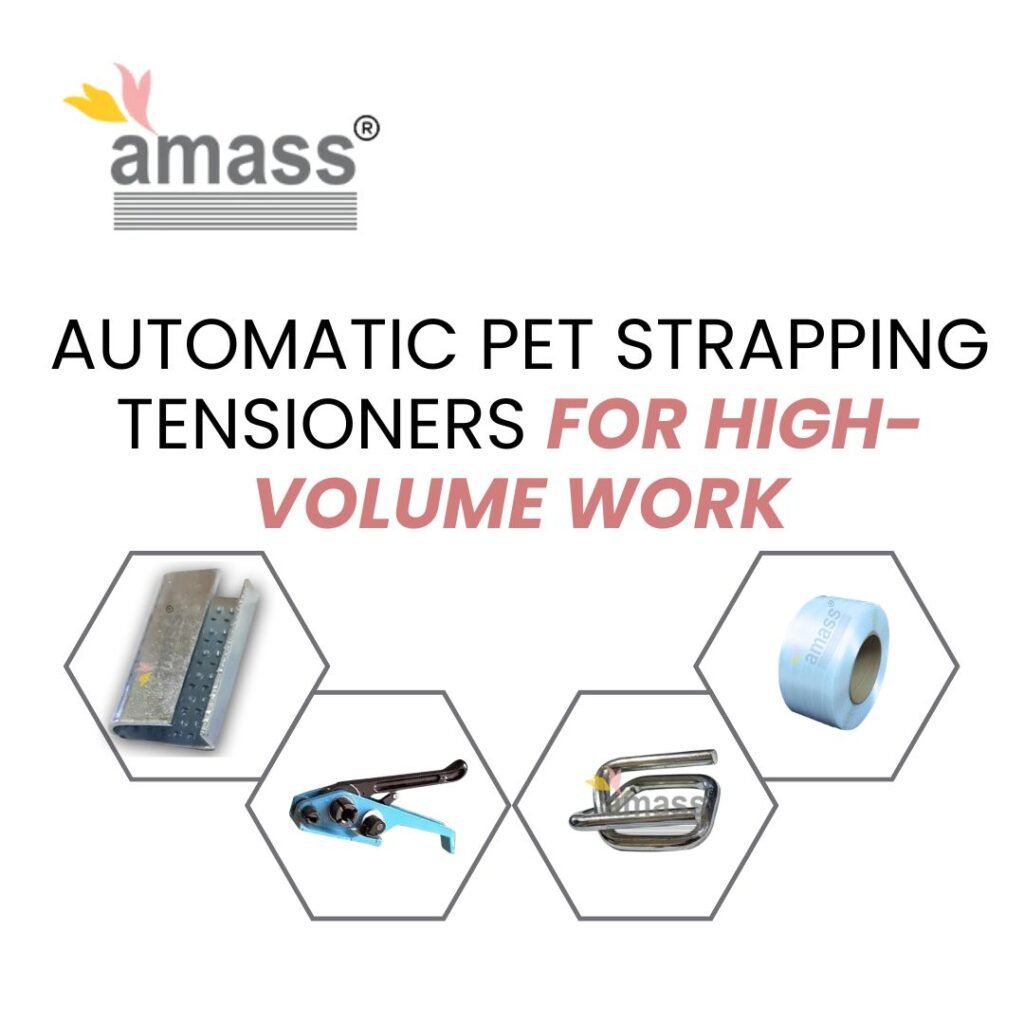
Introduction
Manual strapping kills productivity in high-volume operations. Operators spend 15-25 seconds per strap with hand tensioners, their wrists ache after a few hundred cycles, and tension varies wildly from one strap to the next—which means some loads arrive secure while others shift in transit. Automatic PET strapping tensioners cut that cycle time to under 5 seconds, deliver consistent tension across thousands of applications, and eliminate the repetitive strain injuries that drive up workers’ compensation costs. This guide explains how battery-operated and pneumatic tensioners work, what specifications matter for high-volume environments, and how to calculate real ROI when your operation straps hundreds or thousands of loads daily.
Understanding Automatic PET Strapping Tensioners
Automatic PET tensioners combine tensioning, sealing, and cutting in one tool with single-button or two-button operation. The operator positions the strap, presses the trigger, and the tool completes the full cycle—pull tension, create a friction weld or crimp a seal, cut the excess strap—without manual intervention. PET (polyester) strap is the preferred material because it offers high tensile strength, controlled elongation for shock absorption, and excellent tension retention over time. These tools evolved from manual lever-action tensioners that required separate sealing and cutting steps, each demanding physical effort and slowing throughput.
Types of Automatic Tensioners
Battery-Operated Tensioners
Battery-operated tensioners use rechargeable lithium-ion batteries that power both the tensioning motor and the friction welding or crimping mechanism. A fully charged battery typically handles 200-400 strap applications depending on strap width and tension settings. These tools weigh between 3-5 kg, which makes them portable enough for operators to move between workstations or pallets. They work with PET strap widths from 12mm to 19mm and deliver tension forces up to 3,000N, which covers most bundling and palletizing applications.
Pneumatic Tensioners
Pneumatic tensioners run on compressed air, typically requiring 5-7 bar pressure for optimal performance. They complete the tension-seal-cut cycle in 3-5 seconds, which is faster than battery tools and ideal for continuous high-volume lines. Because they’re tethered to an air compressor via hose, they’re less portable but deliver unlimited runtime without battery changes. Pneumatic models handle heavier-duty PET strap—up to 32mm width—and can apply higher tension forces, making them suitable for securing heavy machinery, steel products, and construction materials.
Fully Automatic Strapping Machines
Fully automatic machines integrate into conveyor lines and require no manual tool operation. The machine detects the package, feeds strap around it, tensions, seals, and cuts without operator intervention. Throughput rates range from 20-60 packages per minute depending on package size and strap configuration. These systems make sense when you’re strapping identical or similar-sized loads continuously—think e-commerce fulfillment, food and beverage cases, or carton bundling operations.
Key Specifications to Consider
When selecting automatic tensioners for high-volume work, four specifications determine whether a tool matches your operation:
- Strap compatibility: Width range (typically 12-32mm) and thickness (0.5-1.3mm) the tool can handle.
- Tension force: Maximum force the tool can apply, usually 1,500-4,000N depending on model.
- Sealing method: Friction weld (stronger, no consumables) vs metal seal crimping (faster initial setup, ongoing seal costs).
- Cycle time: Seconds from trigger press to completed strap, ranging from 3-10 seconds.
Battery capacity and charge time matter for mobile operations—look for tools offering at least 300 cycles per charge and fast charging under 90 minutes. For pneumatic tools, check air consumption rates (typically 0.3-0.6 cubic meters per minute) to ensure your compressor can support multiple tools running simultaneously.
Benefits for High-Volume Operations
Speed and Labor Savings
Automatic tensioners cut application time by 60-70% compared to manual tools. An operation strapping 500 pallets daily saves roughly 1.5-2 labor hours per shift by switching from manual to automatic tools, which translates to 35-50 hours monthly. Those hours can shift to value-added tasks or reduce overtime requirements during peak periods.
Consistency and Quality
Manual tensioning creates 20-30% variation in applied tension between operators and even within a single operator’s work over a shift as fatigue sets in. Automatic tools deliver consistent tension within 5% variance across thousands of applications, which means uniform load security and fewer damaged shipments. The friction welds produced by automatic tools typically achieve 80-90% joint efficiency, compared to 60-75% for manually crimped seals.
Ergonomics and Safety
Repetitive strain injuries from manual strapping—primarily wrist and elbow tendonitis—account for a significant portion of workers’ compensation claims in high-volume distribution centers. Automatic tools eliminate the repetitive gripping, lever pumping, and cutting motions that cause these injuries. Operators report less end-of-shift fatigue and can maintain productivity for longer periods without breaks.
Choosing the Right Tensioner
Start by measuring your daily strap volume. Operations applying fewer than 200 straps per day can function with manual tools, though ergonomics may still favor battery-operated models. Between 200-800 straps daily, battery-operated tensioners offer the best balance of portability, speed, and cost. Above 800 straps per day, especially if concentrated in continuous runs, pneumatic tensioners or fully automatic machines deliver better ROI.
Consider your facility layout. Battery tools work well for scattered workstations, mobile strapping operations, or environments where compressed air isn’t available. Pneumatic tools make sense for fixed strapping stations near loading docks or at the end of production lines where air supply is already present.
Evaluate strap types and load requirements. Light to medium-duty pallets (up to 500kg) work with 12-16mm PET strap and battery tensioners. Heavy pallets, machinery, or export loads often require 19-32mm strap and the higher tension forces that pneumatic tools provide.
Maintenance and Best Practices
Daily checks take 2-3 minutes and prevent most downtime:bandma+1
- Inspect battery charge levels or air pressure supply
- Clean friction welding plates or crimping jaws
- Check for strap debris in feed channels
- Verify cutter blade sharpness
Weekly maintenance includes lubricating moving parts according to manufacturer specifications and inspecting wear components like friction plates, sealing jaws, and cutter blades. Replace friction plates every 5,000-8,000 cycles for consistent weld quality; worn plates create weak joints that fail under load. Most automatic tensioners feature replaceable wear components that extend tool life beyond 50,000 cycles when maintained properly.
Safety and Operator Training
Modern automatic tensioners include overload protection that prevents over-tensioning the strap, emergency stop buttons, and blade guards that protect operators from the cutting mechanism. Despite these features, training remains critical. Operators need to understand proper strap positioning, how to recognize weak welds or crimps, and when to stop for tool inspection.
A simple training protocol most high-volume operations use:
- Position strap flat with no twists, 6-8 inches overlap
- Place tool perpendicular to strap direction
- Press trigger and hold tool steady until cycle completes
- Visually inspect joint before releasing tension
- Trim excess tail to prevent snagging
Real-World Results
A mid-sized distribution center handling 400 pallets daily switched from manual to battery-operated tensioners and reported 35% faster strapping times, 90% reduction in wrist strain complaints, and 12% fewer load damage claims due to more consistent tension. A manufacturing facility using pneumatic tensioners on a high-volume packaging line increased throughput from 450 to 680 units per shift while cutting strap waste by 18% through better seal quality and fewer re-dos. Export logistics operations cite joint strength improvements as the primary benefit—friction welds from automatic tools consistently test 15-20% stronger than manual crimped seals.
FAQs
Q: Battery vs pneumatic: which is better for high volume?
A: Pneumatic wins on speed and unlimited runtime for continuous operations above 800 straps daily. Battery tools offer better portability and work well for 200-800 straps spread across multiple locations. If your facility already has compressed air infrastructure, pneumatic usually delivers lower total cost of ownership.
Q: What strap sizes work with automatic tensioners?
A: Battery-operated tools typically handle 12-19mm strap widths. Pneumatic tensioners cover 12-32mm widths, with heavy-duty models supporting up to 32mm for industrial lashing applications. Check both width and thickness compatibility—some tools max out at 1.0mm thickness even if they accept wider straps.
Q: How long do batteries last in continuous use?
A: Quality lithium-ion batteries deliver 200-400 straps per charge depending on strap width and tension settings. Heavier straps and higher tension drain batteries faster. In high-volume operations, keep two batteries per tool—one in use, one charging—to eliminate downtime.
Q: Can automatic tensioners handle heavy-duty PET strap?
A: Pneumatic tensioners handle heavy-duty PET strap up to 32mm width and 1.3mm thickness with tension forces exceeding 3,500N. Battery tools are generally limited to lighter-duty applications with 12-19mm strap. Match tool specifications to your actual load requirements—undersized tools create weak joints that fail under stress.
Q: Do automatic tensioners work with friction weld sealing only?
A: Most automatic tensioners offer friction weld sealing, which creates the strongest joints without consumable seals. Some models also support metal seal crimping for applications where weld sealing isn’t suitable. Friction welding eliminates ongoing seal costs and typically delivers 10-15% higher joint strength.
Conclusion
Switch to automatic PET tensioners when your operation crosses 200 straps daily or when manual strapping creates ergonomic problems and inconsistent tension. Measure your volume, evaluate battery vs pneumatic based on layout and air availability, and calculate ROI using labor savings plus injury reduction.
Amass Strap supplies precision-engineered automatic PET strapping tensioners—battery-operated and pneumatic models—matched to high-volume industrial environments. Our tools deliver consistent friction weld quality, handle 12-32mm PET strap, and come with technical support for setup, training, and maintenance protocols. Visit amass-strap.com to request tool demonstrations, compare specifications for your operation, or speak with a strapping specialist who understands high-volume requirements.