Industrial Cord Strapping: Durable Solutions for Packaging

Top Tensioner and Sealer Tools Supplier in Delhi
January 20, 2026
Best Tensioner Machine Guide: Types and Specifications
February 16, 2026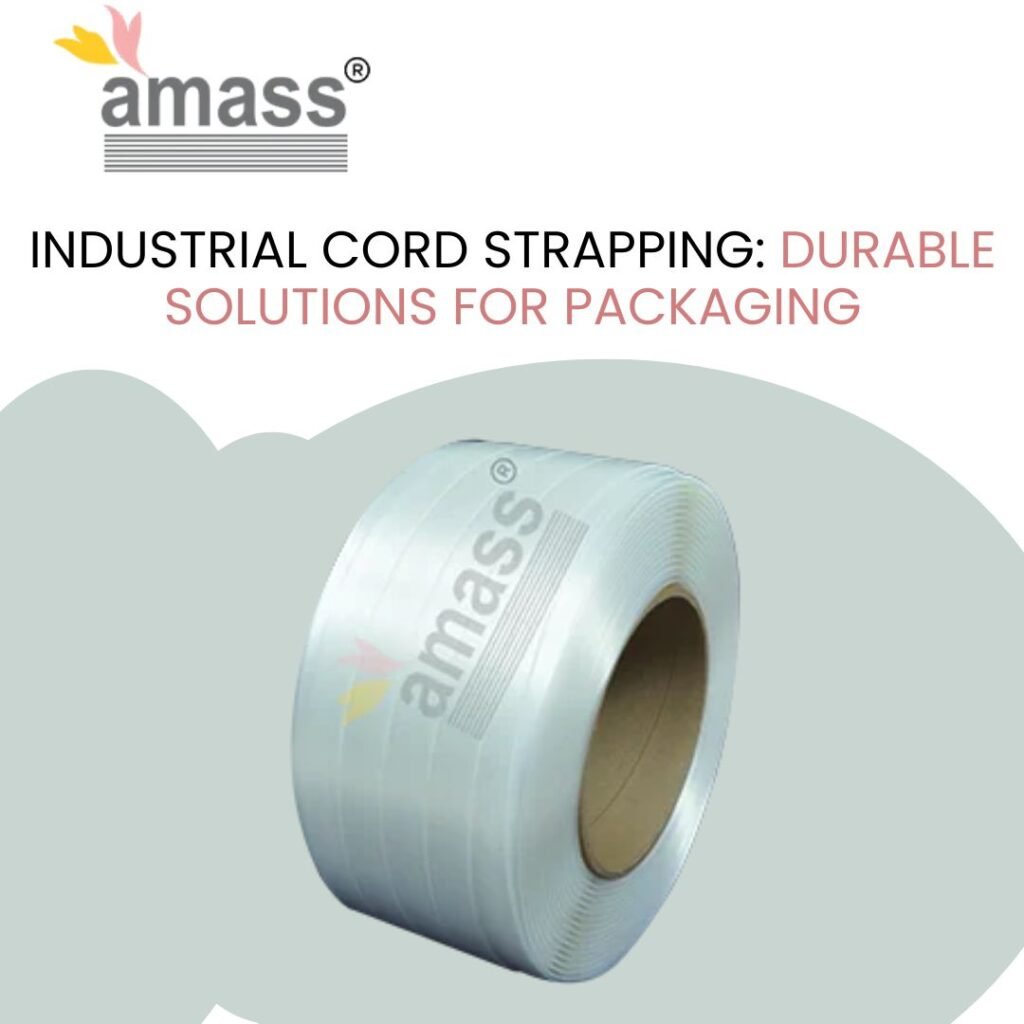
Introduction
Steel strapping cuts hands, rusts cargo, and snaps back dangerously when cut. Light plastic strapping stretches, loosens during transit, and fails on heavy loads. Most industrial packaging operations live with these tradeoffs because they don’t know there’s a middle option that solves both problems. Industrial cord strapping delivers steel-level strength with plastic’s safety and flexibility—no rust, no recoil, and stable tension across long hauls. This guide explains what cord strapping is, how it outperforms traditional materials in harsh conditions, and when switching makes immediate sense for your packaging operation.
What Industrial Cord Strapping Is
Industrial cord strapping uses high-tenacity polyester or nylon fibers embedded in a protective polymer coating. The fibers run parallel along the strap length, creating directional strength that mimics steel without the weight or hazards.
Breaking strength ranges from 1100kg to over 2500kg depending on strap width and fiber density. Most industrial applications use 13-32mm widths with system strengths that match or exceed equivalent steel strapping gauges.
The polymer coating does three jobs: protects fibers from UV and moisture, prevents abrasion during handling, and creates a smooth surface that works with wire buckles or friction seals. Without the coating, polyester fibers would degrade in sunlight and fray at contact points.
Types of Industrial Cord Strapping
Woven Cord Strapping
Cross-woven polyester fibers deliver bi-directional strength and resist splitting when the strap hits sharp edges or corners. The weave pattern distributes stress across multiple fiber bundles, so damage to one section doesn’t propagate along the full strap length.
Woven cord works best for irregular loads—lumber bundles, steel coils, construction materials—where edges dig into the strap during handling or transport. The extra material in the weave adds cost but prevents the catastrophic failures you see with uni-directional straps on rough cargo.
Composite Cord Strapping
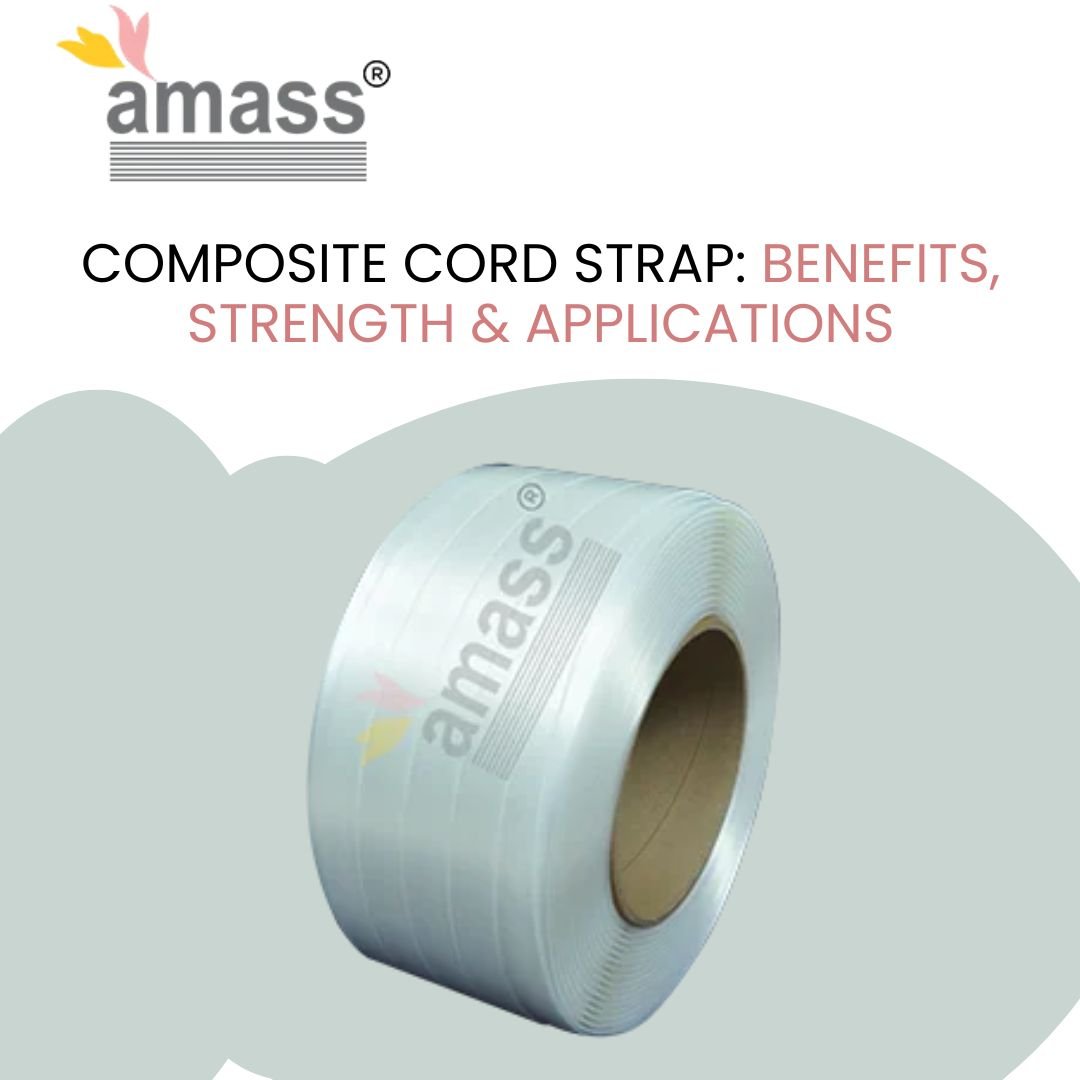
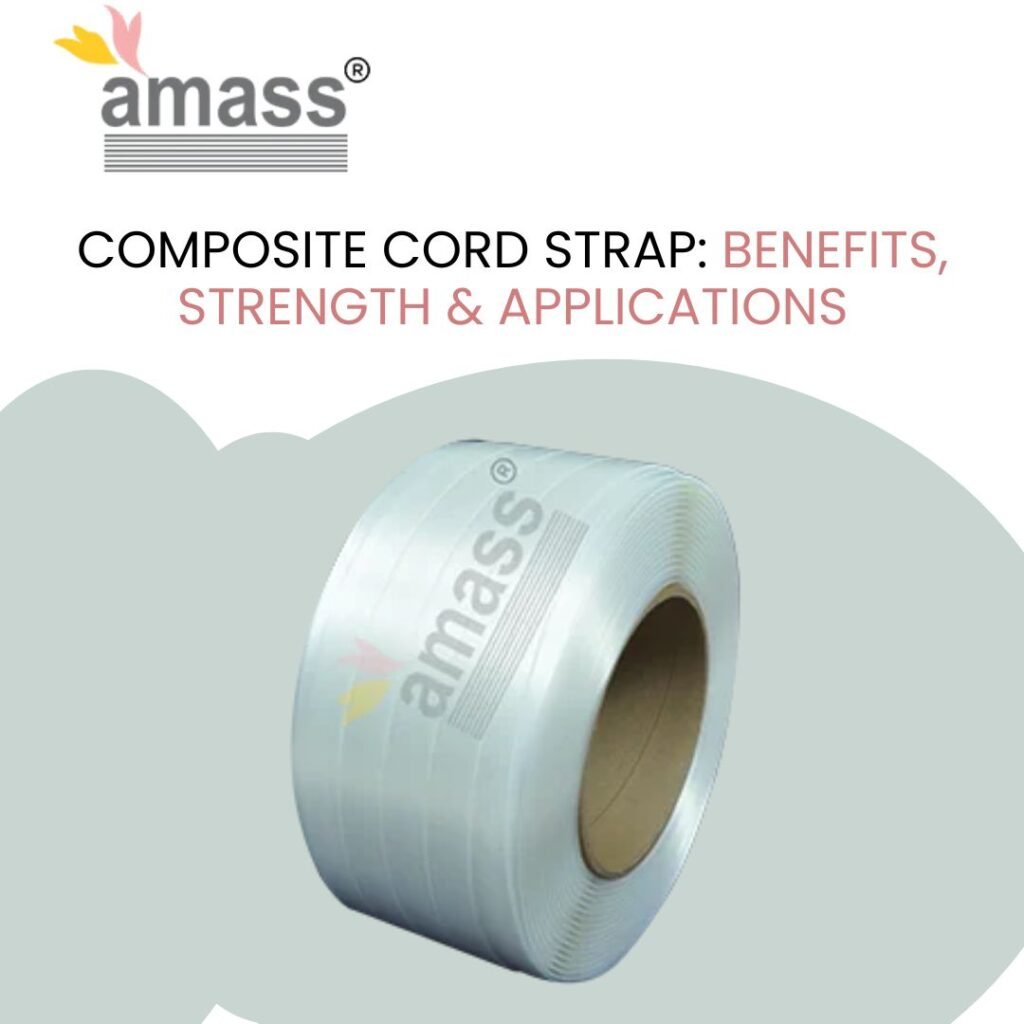
High-tenacity polyester fibers encased in a rigid polymer sheath create a strap that behaves like non-metallic steel. Composite cord absorbs shock through controlled elongation—it stretches 2-5% under load, then recovers to maintain tension. Steel can’t do this; it either holds rigid or snaps.
Load shifts during braking, turning, or rough roads would break steel strapping. Composite cord absorbs the movement, distributes the stress, and maintains secure restraint. This matters most on long-haul transport where multiple handling cycles and dynamic loads test the strapping system repeatedly.
Why Cord Strapping Is Durable
Temperature swings that rust steel or make PP brittle don’t affect polyester fibers. Cord strapping maintains 90%+ of rated strength from -40°C to +80°C. The polymer coating prevents moisture infiltration, so the fibers stay dry and strong even in monsoon conditions or marine environments.
UV resistance comes from stabilizers in the coating formula. Quality cord strapping maintains 80%+ strength after 12 months of outdoor exposure; cheap versions degrade in 3-6 months. This difference shows up in export packaging that sits in container yards or outdoor storage before final delivery.
Controlled elongation gives cord strapping memory—it stretches under shock loads, then returns to tension. Steel stays rigid until it fails; polypropylene creeps and never recovers. Cord strapping absorbs the hits and keeps working.
Cord Strapping vs Steel and Other Plastics
Steel weighs 6x more than equivalent-strength composite cord. That weight adds up fast—a shift from steel to cord strapping on 100 daily loads cuts handling weight by hundreds of kilograms per week. Operators move faster, fatigue less, and injuries from heavy coil handling drop.
Steel recoil when cut causes more packaging injuries than any other strapping hazard. Cord strapping releases tension gradually without snapping back. No sharp edges means fewer cut hands, damaged products, or punctured tires on forklifts.
Performance Against Polypropylene and PET
Polypropylene creeps—it stretches over time and loses 30-40% of applied tension within 72 hours. Loads secured with PP need retensioning or arrive loose. Cord strapping maintains 95%+ of tension across multi-day transits.
Flat PET strap offers high breaking strength but poor shock absorption. It works well for static loads on pallets but fails on dynamic applications where loads shift. Cord construction adds flexibility that flat strap can’t match.
Key Industrial Applications
Manufacturing operations use cord strapping for machinery, appliances, automotive components, and fabricated metal parts. The non-corrosive properties prevent rust stains on finished surfaces—critical for painted or polished goods.
Construction materials—bricks, tiles, lumber, pipes, precast concrete—benefit from cord strapping’s edge tolerance. These loads have irregular shapes and sharp corners that cut through flat strapping. Woven cord distributes pressure and resists abrasion.
Export containers sit in yards, cross climate zones, and face rough handling at multiple ports. Cord strapping holds tension through these cycles without the rust, creep, or brittleness that compromise steel or plastic alternatives.
How to Specify the Right Cord Strap
Match Strength to Load Weight
Calculate total load weight including packaging, then add 30-50% safety margin for dynamic forces during transport. Divide by the number of straps you’ll apply to get per-strap load. Select cord strapping with system strength that exceeds this number.
System strength accounts for strap plus buckle. A cord rated for 1500kg with a buckle rated for 1200kg gives you 1200kg system strength—the buckle limits capacity. Always spec the complete system, not just strap ratings.
Consider Environmental Factors
High UV exposure, temperature extremes, or long outdoor storage demand premium-grade cord with enhanced stabilizers. Standard grades work fine for indoor packaging or quick-turn shipments, but long-haul export needs the extra durability.
Sharp cargo edges require woven cord or edge protectors. Composite cord handles moderate abrasion, but continuous cutting at the same contact point will eventually compromise the coating and expose fibers.
Compatible Buckles and Tools
Wire buckles engineered for cord strapping create the strongest joints. Phosphate-coated buckles add corrosion resistance and surface texture for better grip. Match buckle width and strength rating to your strap specifications—mismatches create weak links.
Manual tensioners work for low volumes under 50 loads per day. Pneumatic or battery-powered tools make sense above 100 daily loads because they deliver consistent tension and reduce operator fatigue. Integrated tensioner-cutter-sealer combos cut application time by 40% compared to separate tools.
Treat strap, buckle, and tool as one system. Mixing components from different suppliers introduces compatibility risks that compromise joint strength and reliability.
When to Switch to Industrial Cord Strapping
Switch when steel creates more problems than it solves: rust marks on cargo, operator injuries from recoil or sharp edges, or excessive weight slowing down packaging lines. If you’re retaping boxes because steel corners punctured cartons, cord strapping eliminates the problem.
Switch when PP or PET doesn’t hold: loads arrive loose, straps show visible stretching, or you’re adding extra straps to compensate for creep. Cord strapping maintains tension better and often lets you reduce strap count per load.
Export packaging with extended transit times benefits immediately. The combination of UV resistance, shock absorption, and stable tension makes cord strapping the default choice for containers crossing multiple climate zones or sitting in outdoor yards.
Frequently Asked Questions
Q: Can cord strapping really replace steel in heavy-duty applications?
A: Yes, for most industrial loads under 3000kg. Composite cord in 19-32mm widths delivers 1650-2500kg breaking strength with better shock absorption than steel. Very sharp-edged cargo or loads exceeding 3000kg may still need steel, but 70-80% of industrial strapping applications can switch to cord without compromising security.
Q: How much does cord strapping cost compared to steel?
A: Initial material cost runs 10-20% higher than steel per meter, but total cost drops when you account for faster handling, lower injury rates, and eliminated rust damage claims. Most operations see payback within 3-6 months through reduced labor time and cargo damage.
Q: Does cord strapping work with automated packaging lines?
A: Yes, with the right tooling. Automated tensioners and sealers designed for cord strapping integrate into existing lines with minimal modification. The challenge is matching strap stiffness to feeder mechanisms—some systems need adjustments to handle cord’s flexibility compared to rigid steel.
Q: What’s the shelf life of unused cord strapping?
A: 2-3 years when stored indoors, away from direct sunlight and temperature extremes. UV exposure degrades the polymer coating even on unused strap. Keep coils in original packaging until use and rotate inventory on a first-in-first-out basis to maintain quality.
Q: Can I reuse cord strapping after cutting it off a load?
A: Not recommended. Tensioning stretches the fibers and deforms the coating. Reused strap won’t deliver the same breaking strength or tension retention. Wire buckles are single-use—crimping permanently deforms them. Always use fresh components for each application.
Conclusion
Industrial cord strapping solves the steel-versus-plastic dilemma with high strength, safe handling, and durable performance across harsh conditions. Match strap type to load requirements, pair with compatible buckles and tools, and spec the complete system for documented strength. Most operations see immediate gains in safety, handling speed, and cargo protection.
Audit your current strapping materials against these criteria and identify where cord strapping eliminates recurring problems.
Amass Strap manufactures woven and composite cord strapping systems engineered for demanding industrial packaging. We provide matched strap-buckle combinations with third-party tested system strength, not just strap ratings. Our technical team helps you spec the right cord type, width, and tooling for your specific loads and environmental conditions.
Visit amass-strap.com to see our complete range of industrial cord strapping solutions with full specifications, application guides, and tool recommendations, or contact us to discuss your packaging requirements and get samples for trial runs on your actual loads.