Maximizing PET Strap Safety & Efficiency with Serrated Seals

Choosing the Right Tensioner & Sealer Tool for Strapping
December 17, 2025
Eco-Friendly Composite Cord Strap Systems & Reusable Tools
December 17, 2025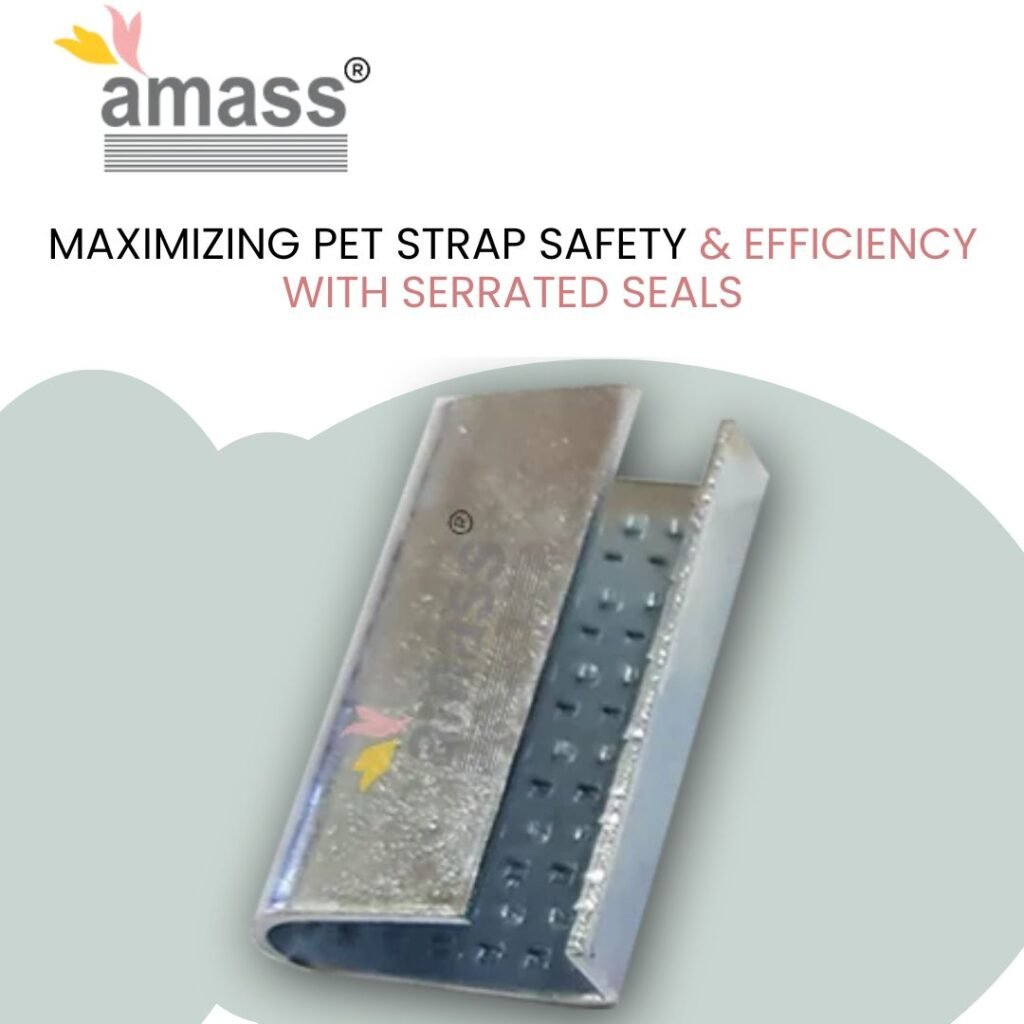
Introduction
PET strapping operations lose cargo and credibility when smooth seals slip loose on glossy polyester surfaces, allowing pallets to shift during transport and arrive damaged. The problem isn’t strap quality—it’s seal mismatch creating joints that achieve only 40-50% of strap breaking strength versus 70-75% with proper serrated designs. Serrated seals grip smooth PET through interior teeth that bite into polyester coating, preventing the progressive slippage that smooth seals exhibit under vibration and load stress. This article explains how serrated teeth create mechanical grip on glossy surfaces, identifies which seal specifications match different PET strap widths and load weights, and demonstrates proper application techniques that maximize both workplace safety and joint efficiency across manual and semi-automatic operations.
Understanding Serrated Seal Design
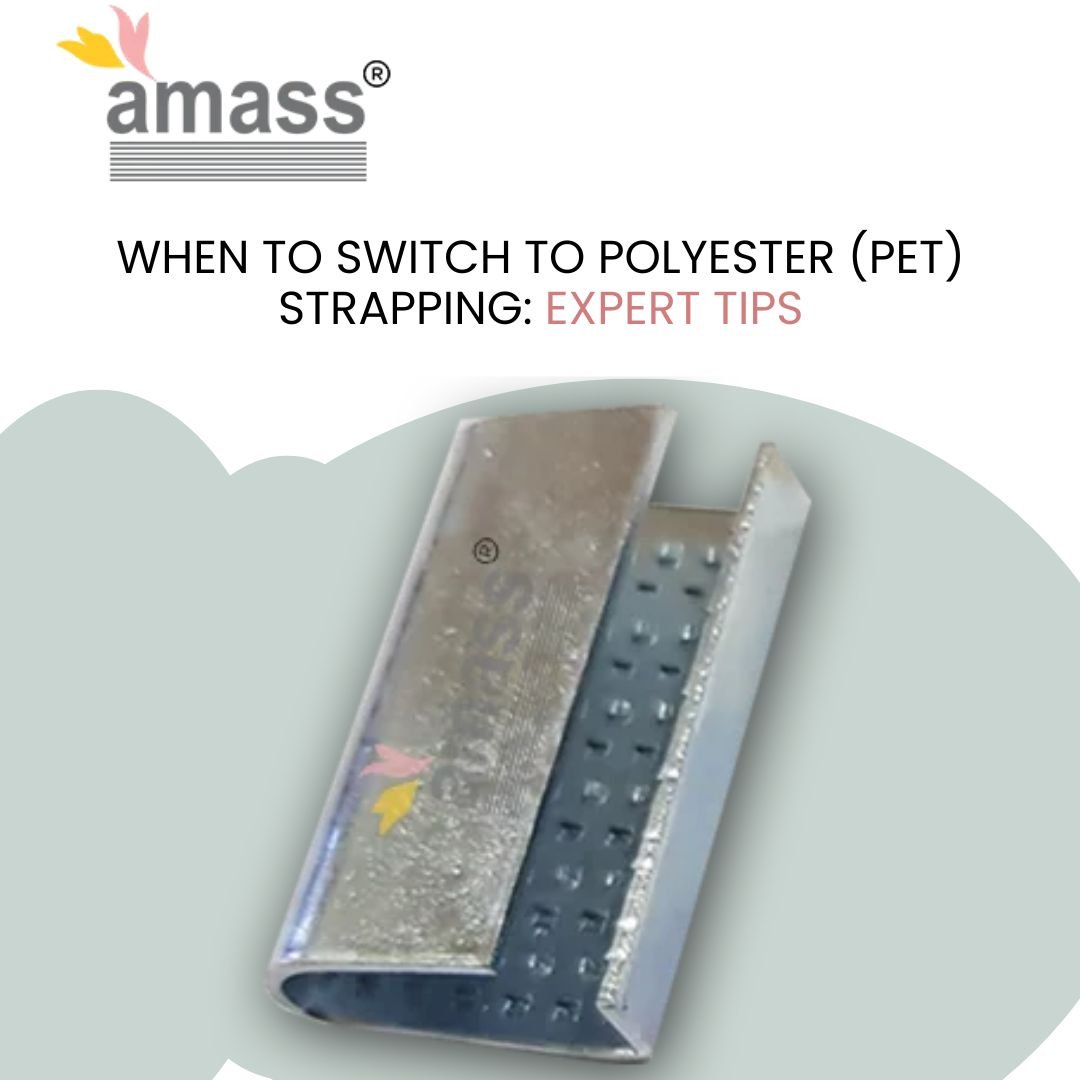
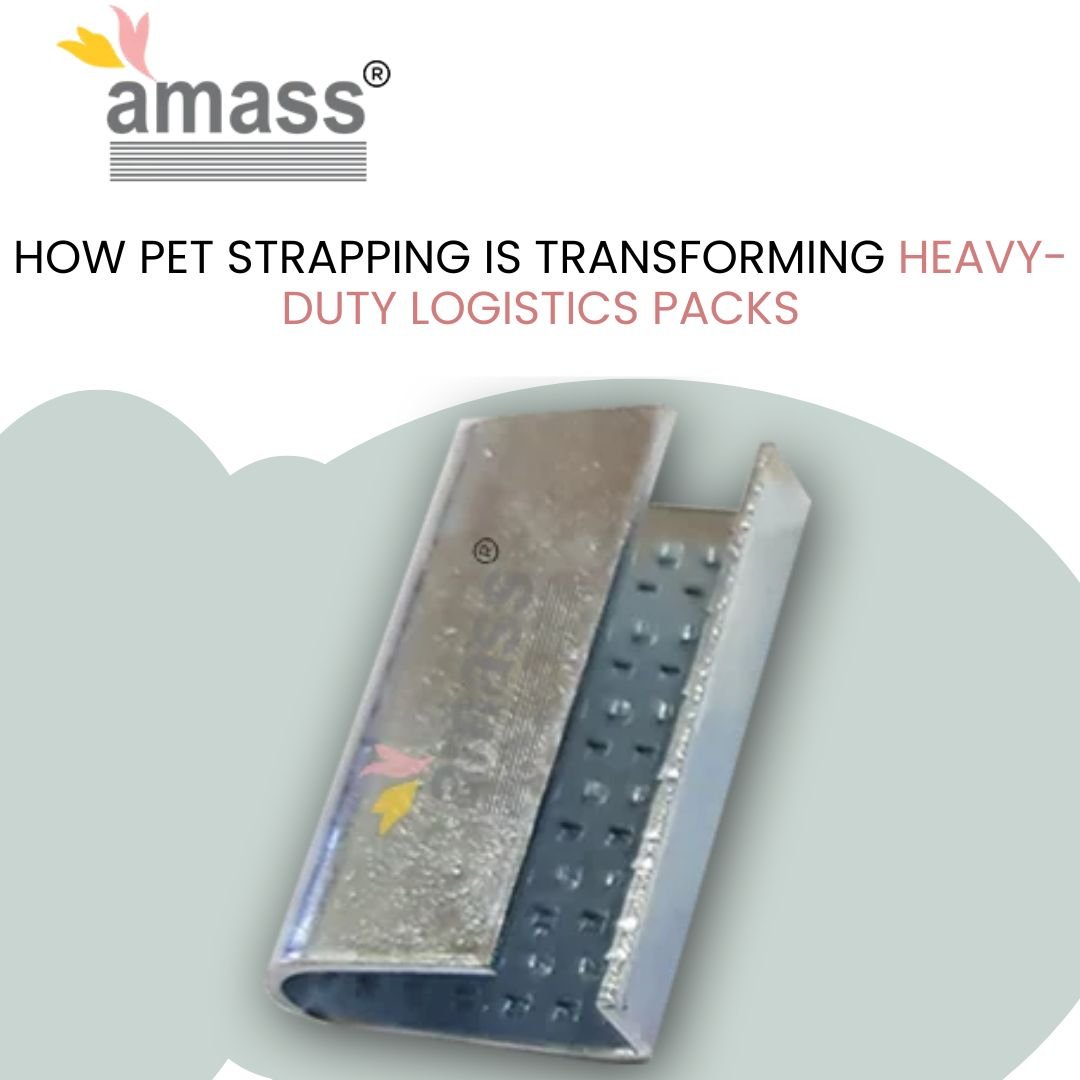
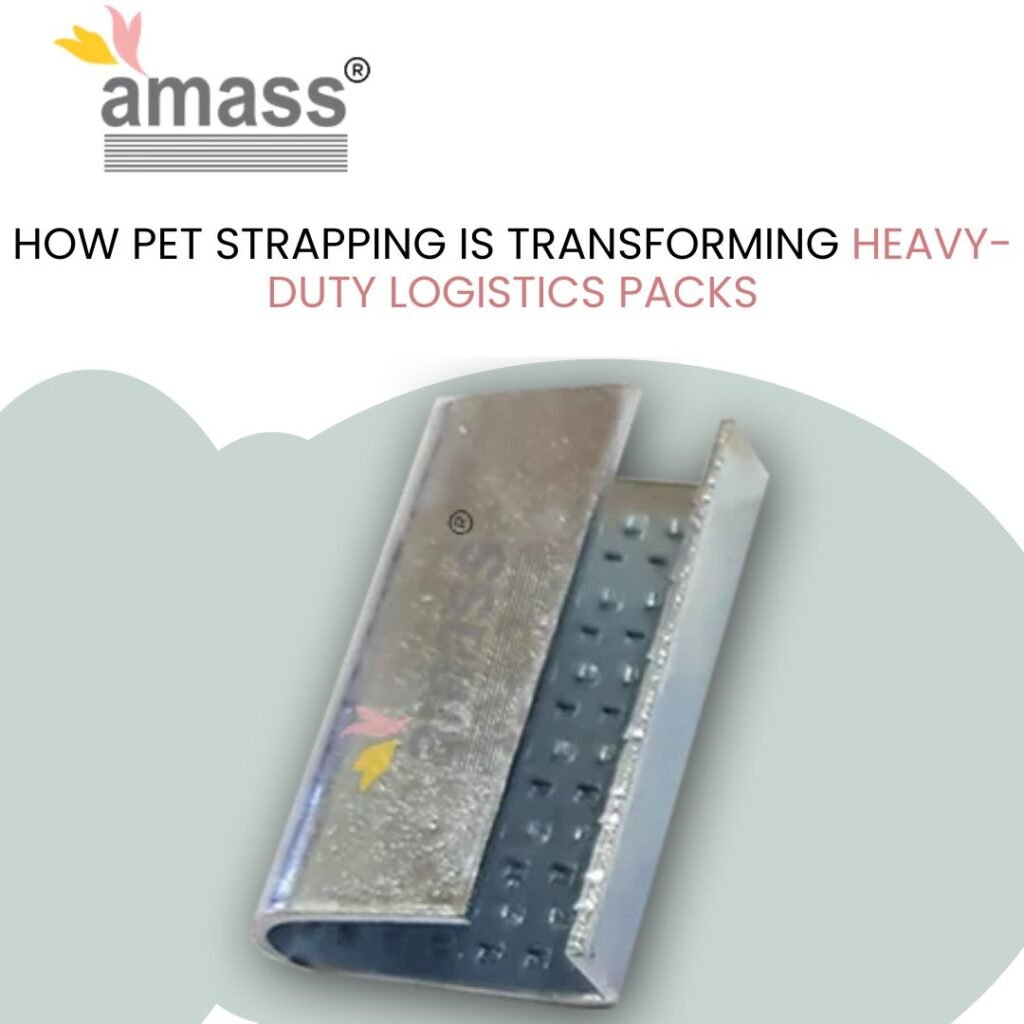
Serrated seals feature interior ridges or teeth stamped into galvanized steel during manufacturing. These teeth create physical anchor points when crimped onto PET strapping, forming mechanical interlocks that resist lengthwise slippage. The galvanized finish prevents rust during storage and provides corrosion resistance for maritime shipping or outdoor applications.
Standard constructions include single-feed designs for manual application and closed seals for automated systems. The metal thickness typically ranges from 0.8-0.9mm for general use, with heavier gauges available for extreme loads. Hardness ratings between 52-62 Rockwell B ensure teeth remain rigid during crimping without breaking.
Available sizes match PET strap widths from 9mm through 32mm, with each seal dimension calibrated to the specific strap width for optimal coverage. Undersized seals leave strap edges unsupported, while oversized variants won’t close properly around narrower strapping.
Why PET Demands Serrated Grip
PET strapping’s smooth, glossy surface creates minimal friction with flat metal. Smooth seals designed for textured polypropylene strapping slip dangerously when applied to polyester because they depend on surface texture for grip. This incompatibility produces joints that appear secure initially but loosen progressively during shipping.
The higher stiffness of PET compared to polypropylene means less material deformation during crimping. Smooth seals can’t compress deeply enough into stiff polyester to create adequate grip through pressure alone. Serrated teeth compensate by cutting into the polymer coating regardless of material stiffness.
Testing demonstrates the performance gap. Smooth seals on PET achieve 40-50% joint efficiency, meaning a 600 kg rated strap delivers only 240-300 kg at the seal joint. Serrated designs reach 70-75% efficiency, providing 420-450 kg joint strength from identical strap material.
Safety Improvements from Proper Sealing
Serrated seals prevent the joint failures that create workplace hazards and cargo damage. When straps loosen during transport, shifted loads become dangerous during unloading operations. Falling cargo causes injuries and equipment damage at warehouses and distribution centers.
The mechanical grip creates tamper-resistant closures suitable for high-value goods and security-sensitive shipments. Once properly crimped, serrated seals can’t be reopened without visible damage, providing evidence if cargo is accessed during transit.
PET strapping paired with quality serrated seals eliminates the sharp edges and violent recoil hazards inherent in steel strapping systems. The combination provides equivalent or superior load security without the injury risks that made steel infamous in packaging operations.
Load Retention Under Stress
Serrated seals maintain tension through the vibration, impacts, and temperature changes that cargo experiences during multi-modal shipping. The teeth prevent micro-movements that allow smooth seals to gradually slip through crimps. This retention proves critical for loads traveling thousands of miles across trucks, trains, and ocean vessels.
Operational Efficiency Gains
Higher joint efficiency means more effective use of strap tensile strength. Operations can use thinner, lighter PET strap when serrated seals deliver 70-75% efficiency versus requiring heavier strap to compensate for 40-50% efficient smooth seals. This material optimization reduces strapping costs per package.
Reduced rework saves significant labor hours. Packages properly sealed with serrated designs don’t require re-strapping after initial handling or during loading operations. Warehouse staff spend less time fixing loose straps and more time on productive tasks.
The manual application process remains straightforward. Tensioning PET strap, positioning the serrated seal, and crimping with a simple hand tool takes seconds per package. This simplicity suits operations processing dozens to hundreds of packages daily without automated equipment investment.youtube
Application Best Practices
Tool and Seal Matching
Match seal width exactly to strap width for complete edge coverage. A 19mm strap requires 19mm seals—using 16mm leaves strap edges unsupported and compromises joint strength. Verify seal thickness matches tool jaw specifications, as heavy-duty seals may not fit standard sealers.
Gripper or offset sealers designed for serrated profiles apply proper crimping pressure to embed teeth fully. Tools meant for smooth seals may not compress serrated patterns adequately, resulting in weak joints prone to failure.
Proper Application Sequence
- Thread PET strap through the seal with 4-6 inches of tail extending past the seal body
- Apply tension using manual or pneumatic tensioner until strap coating begins visible peeling
- Position seal over the overlapped strap section ensuring both layers sit centered in the seal
- Fully close the sealer tool until seal legs compress completely around both strap layers
- Verify teeth have penetrated the strap surface by checking for visible indentations
- Cut excess strap tail leaving 2-3 inches beyond the seal for grip retention
Incomplete crimping where the seal closes only partially fails to engage all teeth, producing weak joints. The sealer must close completely to drive teeth through the polyester coating into the fiber matrix beneath.youtube
Visual inspection confirms proper sealing. Look for uniform seal deformation, centered strap positioning, and visible tooth marks on the strap surface. Reject any application showing misalignment, partial crimping, or damaged seal components.
Selecting Seals for Specific Applications
Light palletized goods under 300 kg can use standard 0.8mm thick seals in widths matching strap size. Medium loads from 300-800 kg benefit from 0.9-1.0mm gauge seals providing enhanced grip strength. Heavy industrial applications exceeding 800 kg demand heavy-duty seals engineered specifically for maximum load retention.
Environmental exposure determines finish requirements. Indoor warehousing suits standard galvanized seals protecting against normal moisture. Maritime shipping, outdoor storage, and corrosive industrial environments require enhanced galvanization or protective coatings that resist saltwater and chemical exposure.
Some applications justify friction or heat welding over metal seals despite serrated improvements. High-volume automated lines processing thousands of packages daily achieve better economics through welding systems that eliminate per-package seal costs. However, manual and semi-automatic operations handling moderate volumes find serrated seals more practical than welding equipment investment.
Common Application Errors
Using smooth or open seals on PET strap represents the most frequent mistake. These designs lack the mechanical grip necessary for glossy polyester surfaces and produce joints that fail predictably during shipping. Always specify serrated seals for any PET strapping application.
Under-tensioning before sealing prevents proper strap coating peel that indicates optimal tension. This leaves excess slack that allows loads to shift even when seals hold. Apply full tension until coating visibly peels inside the seal area before crimping.youtube
Tool wear degrades seal quality gradually. Worn sealer jaws fail to compress seals completely, preventing full tooth penetration. Damaged jaw patterns create uneven pressure that embeds some teeth while leaving others barely contacting the strap surface. Monthly tool inspection and timely jaw replacement maintain consistent seal quality.
Cost-Benefit Analysis
Serrated seals cost marginally more than smooth alternatives—typically 10-15% premium per unit. However, this upfront difference becomes irrelevant when calculating costs of cargo damage, re-strapping labor, and customer complaints from loosened packages. A single damaged shipment often exceeds annual seal cost differences.
Standardizing on serrated seals for all PET applications simplifies inventory management and operator training. Warehouses don’t need separate seal stocks or specialized procedures for different strap types. This standardization reduces errors where wrong seal types get applied accidentally.
The documented joint efficiency of strap-seal combinations supports cargo insurance requirements and liability protection. Operations can demonstrate proper securing methods through certified system strength data, protecting against claims that inadequate packaging caused damage.
FAQs
Q: Do serrated seals work on polypropylene strapping?
A: Serrated seals function on PP strapping but may be unnecessary since textured PP surfaces provide natural grip with smooth seals. The aggressive teeth designed for smooth PET can potentially damage softer polypropylene materials. Use smooth seals for textured PP unless dealing with heavy loads where serrated provides extra security margin.
Q: What joint efficiency should I expect from serrated seals on PET strap?
A: Properly applied serrated seals achieve 70-75% of base strap breaking strength on PET applications. A 600 kg rated strap delivers 420-450 kg joint strength with quality serrated seals and correct crimping technique. This represents 50-75% improvement over smooth seals’ 40-50% efficiency on glossy polyester surfaces.
Q: Can I use the same sealer tool for both smooth and serrated seals?
A: Many manual sealers accommodate both seal types, but serrated seals perform best with gripper or offset sealers specifically designed for their profile. These specialized tools apply proper compression to embed all teeth fully. Using tools meant for smooth seals on serrated designs may produce incomplete crimping and weak joints.
Q: How do I know if my seal has crimped properly?
A: Visual inspection shows uniform seal deformation with both legs compressed tightly around the strap. Check for visible tooth indentations on the strap surface indicating proper penetration. The seal should feel rigid when pulled—any movement between seal and strap indicates incomplete crimping requiring re-application.
Q: Are galvanized serrated seals necessary for all applications?
A: Galvanized finish provides corrosion protection essential for maritime shipping, outdoor storage, and long-term warehouse inventory. Indoor operations with climate-controlled environments can sometimes use ungalvanized seals at lower cost, but the minimal price difference rarely justifies sacrificing rust protection. Galvanized remains the standard for reliability across varied conditions.
Conclusion
Serrated seals transform PET strapping from a slippage-prone system into reliable cargo security by delivering 70-75% joint efficiency versus 40-50% from mismatched smooth designs. The mechanical tooth grip prevents the progressive loosening that creates cargo damage and workplace hazards when loads shift during transport. Proper seal selection matched to strap width, correct crimping with appropriate tools, and visual verification of tooth penetration maximize both safety and operational efficiency across manual packaging operations.
Request serrated seal samples matched to your current PET strap specifications for side-by-side performance testing.
Amass Strap supplies integrated PET strapping and serrated seal systems engineered for maximum joint efficiency and cargo security. Our PET strap range includes 9mm through 32mm widths with breaking strengths from 400 kg to 1,500 kg, each paired with precisely matched galvanized serrated seals delivering certified 70-75% joint efficiency. We provide 0.8-1.0mm seal thickness options for light through heavy-duty applications, with enhanced galvanization available for maritime and corrosive environments. Our technical team assists with seal-strap-tool matching to ensure optimal performance in your specific application, backed by documented system strength testing and application training.
Visit amass-strap.com to download our PET strap and serrated seal compatibility chart showing recommended combinations for different load classes, request sample packages including strap, seals, and basic sealer tool for hands-on testing in your facility, or schedule a packaging consultation where our specialists evaluate your current PET strapping practices, identify opportunities to improve joint strength and reduce re-strapping labor, and demonstrate proper serrated seal application techniques that maximize safety and efficiency across your packaging operations.