Top Industries Using PET Straps: Textiles & Heavy Machinery

Top Pet Strap Serrated Seals Supplier in Chennai
January 20, 2026
Top Tensioner and Sealer Tools Supplier in Delhi
January 20, 2026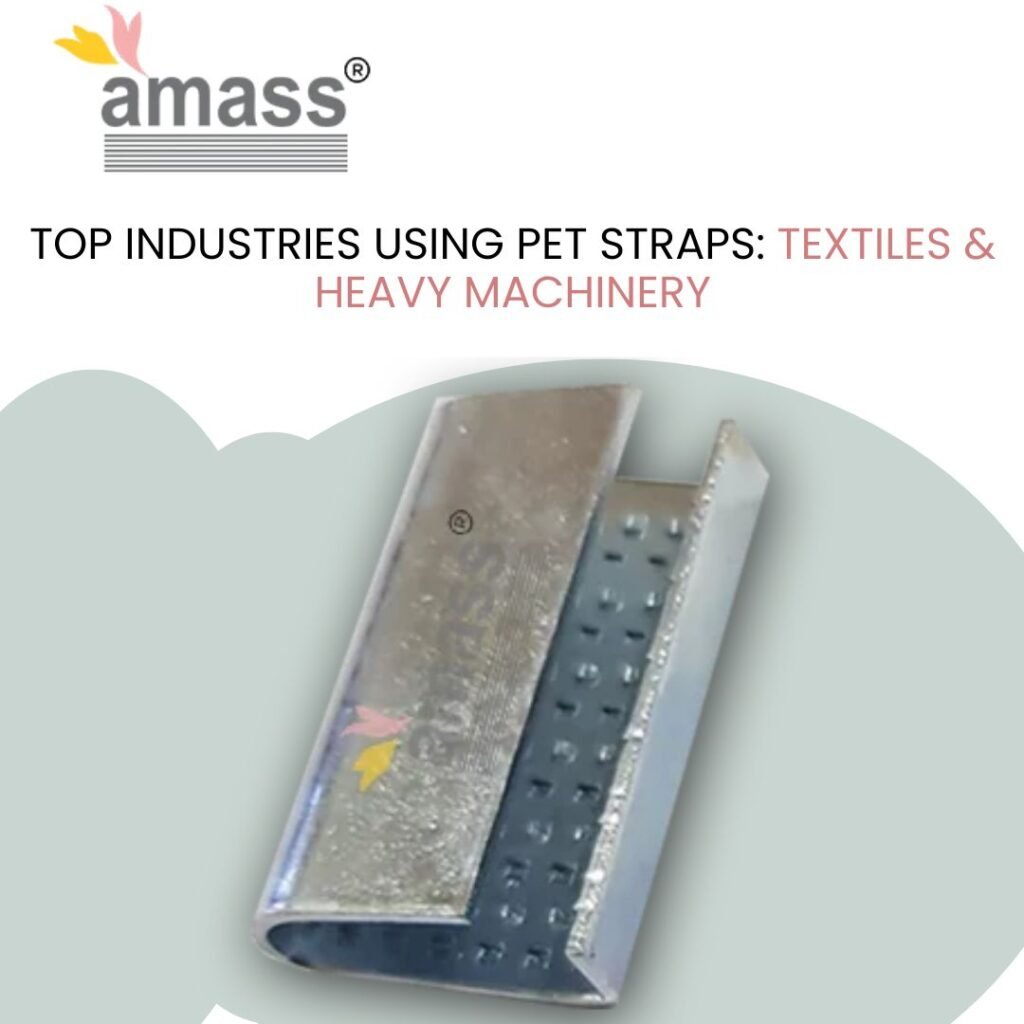
Introduction
Across industrial packaging, PET strapping is often treated as a generic consumable. Buyers focus on width, thickness, and price, then move on. That approach works until loads start shifting, straps relax mid-transit, or packaging costs quietly rise.
Textiles and heavy machinery sit at opposite ends of the load spectrum. One deals with compressible, high-volume goods. The other handles rigid, high-mass equipment. Yet both industries are steadily moving toward PET strapping for the same reason: predictable performance under real handling conditions.
This article explains how PET straps are used in textiles and heavy machinery, and why the same material works for both. We break down load behavior, strap selection, application methods, and common mistakes buyers make when choosing PET for these sectors. The aim is practical clarity—so you can select PET straps that match how your loads move, not how they look on paper.
What PET straps are and why they matter
Core material properties
PET straps are made from polyester. They combine high tensile strength with controlled elongation. This allows the strap to stretch slightly under load and recover, maintaining tension instead of snapping or loosening.
Why industries moved away from rigid strapping
Rigid strapping transfers shock directly to the load. PET absorbs movement. In transport environments where vibration, braking, and stacking are unavoidable, that difference matters more than rated breaking strength.
General industries using PET strapping
PET strapping is now standard across multiple sectors because it balances strength, safety, and handling efficiency.
Common users include:
- Warehousing and distribution centers
- Construction material suppliers
- Agriculture and bulk goods
- Paper, plywood, and panel products
A recurring pattern: industries with repeat handling cycles adopt PET faster than one-time shipment businesses.
PET strapping in the textile industry
How textile loads behave
Textile goods are compressible. Bales and rolls settle after strapping. If tension does not recover, straps loosen.
Why PET fits textile packaging
PET’s controlled stretch allows the strap to follow load compression and rebound. This keeps bundles tight without cutting into fabric or deforming rolls.
Common textile use cases
- Fabric rolls
- Yarn and fiber bales
- Finished garment cartons
In many textile units, operators reduce strap count after switching to PET because tension retention improves.
Strap variants typically used
- Medium-width embossed PET
- Moderate thickness for flexibility
- Serrated seals or friction welds for secure locking
PET strapping in heavy machinery packaging
What “heavy machinery” means in packaging
This includes industrial equipment, machine parts, assemblies, and fabricated components. Loads are rigid, uneven, and often have high point weights.
The main challenge
Heavy machinery does not compress. Shock loads during transport place extreme stress on strapping at specific moments.
Why PET works despite common assumptions
PET absorbs dynamic forces better than rigid strapping. Instead of snapping under shock, it stretches briefly and recovers, keeping the load secured.
A counterintuitive insight: many machinery loads fail due to shock, not static weight. PET performs better in those conditions than stiffer materials.
Typical strap configurations
- Wider PET straps
- Higher tensile grades
- Edge protectors where required
- Compatible heavy-duty tensioning tools
Other high-demand industrial applications
While textiles and machinery are clear examples, PET strapping is also widely used in:
- Metal profiles and pipes
- Building materials
- Automotive components
- Industrial exports
These sectors share one requirement: stable tension across long or rough transport cycles.
Choosing PET straps for specific industrial needs
Match strap strength to load behavior
Do not select strength based only on load weight. Consider:
- Compression or rigidity
- Transport distance
- Handling frequency
Select width and thickness deliberately
Wider straps distribute force better. Thicker straps resist abrasion but reduce flexibility. Balance both.
Check tool compatibility
Ensure your tools can apply and seal the selected PET consistently. Poor tool-strap pairing causes more failures than strap quality alone.
Quality and performance factors buyers must check
Tension retention
A strap that holds tension after 24–48 hours performs better than one with higher initial strength but rapid relaxation.
Elongation range
Too little stretch leads to breakage. Too much leads to loose loads. Controlled elongation is the target.
Environmental resistance
PET resists moisture and most chemicals. This matters for open storage, port handling, and exports.
An uncomfortable truth: many strap failures blamed on “transport conditions” trace back to incorrect elongation choice.
FAQs about industrial PET strap use
Can PET straps replace steel in heavy machinery?
In many cases, yes. For dynamic loads and transport vibration, PET often performs better. Steel is still used for extreme static loads or sharp edges.
What PET profile works best for textile bales?
Embossed PET with moderate thickness works well. It grips better during sealing and adjusts to compression without cutting fibers.
Are PET straps suitable for export shipments?
Yes. PET maintains tension over long transit cycles and resists corrosion, making it reliable for containerized exports.
Do heavier loads always need thicker straps?
Not always. Width, elongation, and sealing quality often matter more than thickness alone.
Conclusion
Textiles and heavy machinery may look like opposite industries, but they share the same requirement: straps that hold under movement, not just at rest. PET strapping works in both because it manages tension intelligently.
If your packaging relies on static assumptions, PET may look secondary. If it deals with real handling, PET becomes essential.
AMASS Strapping supplies PET strapping solutions designed around load behavior, application conditions, and long transit realities. We help buyers select straps that perform where it matters—after the load leaves the floor.
Explore our PET strap range or request guidance for your textile or machinery packaging needs.